








Border city surpasses RMB 2 billion in turnover as integrated warehousing, fulfilment and customs infrastructure strengthens China–Russia digital trade
August 2026 — Cross-border e-commerce in Suifenhe, a strategically important Chinese border city adjacent to Russia, reached a new milestone in the first half of 2026.
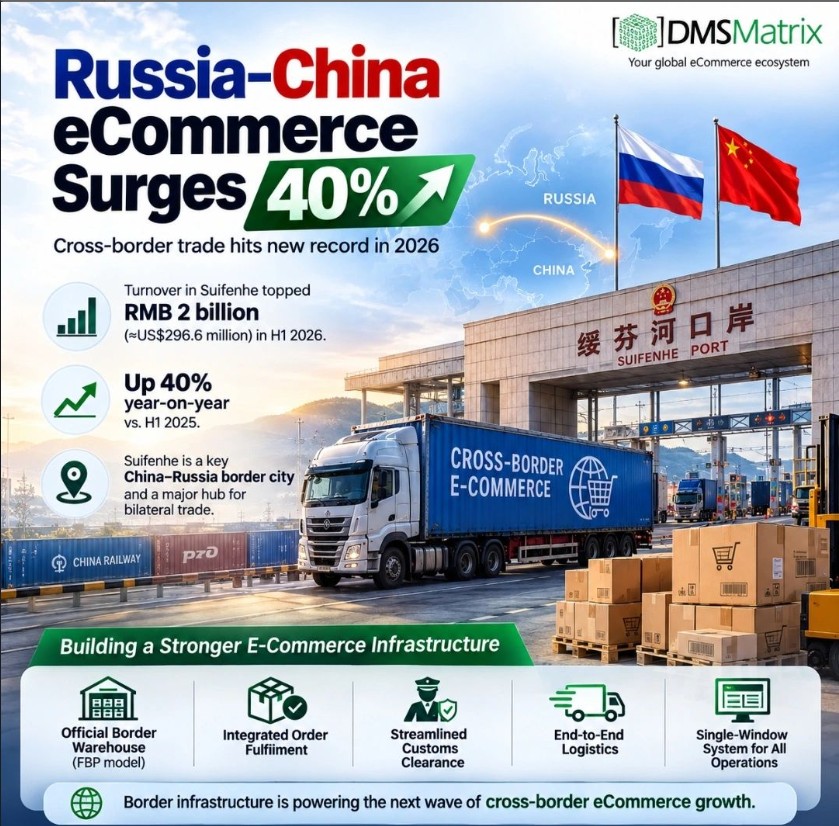
According to local government figures, cross-border e-commerce turnover in the city exceeded RMB 2 billion (approximately US$296.6 million) between January and June 2026. The figure represents a 40% increase compared with the same period in 2025, setting a new record for the city.
Suifenhe has long played an important role in trade between China and Russia, benefiting from its strategic geographical location and established transport links. The latest growth reflects the increasing importance of cross-border e-commerce infrastructure in supporting trade between the two markets.
The local government is actively developing an integrated e-commerce ecosystem designed to simplify and accelerate the movement of goods across the border. A dedicated official border warehouse operating under the FBP model has now been commissioned, while an integrated order fulfilment system has been established to connect key stages of the cross-border journey.
The system enables processes including storage, sorting, customs clearance and logistics to be managed through a more streamlined single-window operation.
By integrating these services, Suifenhe is working to reduce operational complexity for cross-border sellers and logistics providers while improving the efficiency of trade flows between China and Russia.
The development highlights a wider trend in global e-commerce: successful cross-border trade increasingly depends not only on access to international marketplaces, but also on the infrastructure supporting fulfilment, customs compliance, warehousing and last-mile delivery.
As trade between China and Russia continues to evolve, border hubs such as Suifenhe are likely to play an increasingly important role in connecting sellers, logistics providers and consumers across both markets.
For international businesses, the growth of integrated cross-border infrastructure could create new opportunities to access emerging trade routes while improving the speed and efficiency of fulfilment operations.
DMSMatrix continues to follow developments shaping the global e-commerce landscape, including the infrastructure, technology and logistics networks enabling businesses to sell across borders.